PCS Move Checklist: Everything to Do Before Moving Day
A complete PCS move checklist for military members planning a DITY/PPM move. From orders to claim filing, every step you need to take and when.
Top priority items: The most time-sensitive PCS tasks are scheduling TMO counseling (immediately after orders), booking a truck (4–6 weeks ahead for summer moves), and filing your PPM claim (within 45 days of your report date). Don't wait on any of these.
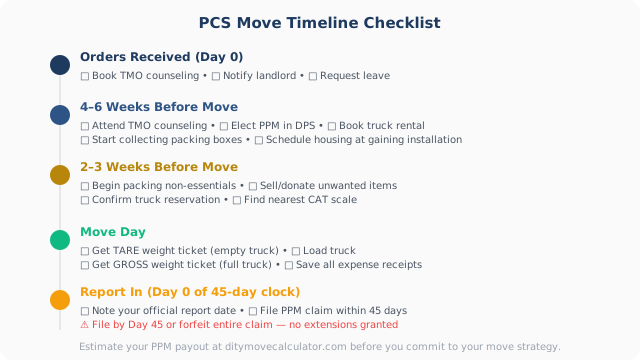
A PCS move is one of the most logistically complex events in a military career, and most service members do it 5–10 times. Even experienced movers miss steps, especially when doing a PPM for the first time. This checklist covers every task, organized by timeline, with notes on what happens if you skip each one.
When Your Orders Arrive: Do These Immediately
Schedule your TMO counseling appointment. You must formally elect a PPM through the Defense Personal Property System before moving anything. TMO counseling is mandatory for PPM authorization. In summer PCS season, counseling appointments book up 4–6 weeks in advance at major installations. Call or log into DPS the same day your orders arrive. No counseling = no PPM election = no reimbursement.
Notify your current landlord or housing office. If you're renting on the local economy, your lease termination notice under the Servicemembers Civil Relief Act (SCRA) takes effect immediately upon proper notice with a copy of your orders. You're typically released from your lease with 30 days' notice after the SCRA notice is given. If you're in government quarters, contact the housing office about your out-date.
Apply for housing or off-post lodging at your new station. On-post housing wait lists can be months long at popular installations. Apply the same week you receive orders. Off-post, start researching neighborhoods near the new installation. Facebook groups for the specific installation are the fastest way to get current housing availability and pricing.
Notify your children's school. Start the school enrollment process early, some districts require forms, immunization records, and prior school transcripts that take time to gather.
Request leave through your chain of command. Most service members need 7–14 days for a PPM move. Include loading days, transit time, and a buffer for unexpected delays. Don't forget to request leave for house-hunting if you're doing a pre-move trip.
4–6 Weeks Before Move Day
Attend TMO counseling and elect your PPM. At the counseling session, you'll review your authorized weight, confirm your move type (PPM, HHG, or combination), complete DD Form 2278, and get your PPM move authorized in DPS. Bring your PCS orders and military ID.
Estimate your shipment weight. Walk through your home with a notepad and estimate the weight of each room. Use our DITY move calculator to model your payout at your estimated weight, and run it again at your full authorized allowance to see how much you'd gain by shipping more.
Book your truck or container service. Summer PCS season (May through August) creates intense demand for moving trucks in military markets. Book 4–6 weeks early to get the right truck size at a reasonable rate. Penske offers a consistent 12% military discount and unlimited one-way miles, see our truck rental guide for a full comparison.
Start collecting packing materials. Liquor stores, bookstores, and office supply companies dispose of sturdy boxes daily. Start collecting 4–6 weeks out. You'll need more boxes than you think. A three-bedroom home typically uses 60–100 medium and large boxes.
Transfer vehicle registration and driver's license if required. If you're moving to a different state, you may have 30–90 days after the move to update your registration and license. Some states are stricter about this than others. Research your new state's requirements in advance.
Update your mailing address. USPS has a mail forwarding service that takes 2–3 business days to activate. Submit the change 2–3 weeks before your move date. Also update your address with the military (MyPay, DEERS, and your branch's personnel system), banks, subscriptions, and federal agencies (IRS, VA if applicable).
2–3 Weeks Before Move Day
Begin packing non-essential items. Anything you won't use in the next 2–3 weeks, seasonal clothing, books, décor, sports equipment, can be packed now. Label every box clearly with both contents and destination room.
Identify and confirm your weigh station. Find the nearest CAT scale to your current location and to your new installation. Look up catscale.com to find certified locations. Call ahead to confirm hours and current fees. Note the location on your phone for move day.
Sell, donate, or discard items you won't ship. But first, run the numbers, weight you ship is weight that earns PPM reimbursement. Our weight maximization guide explains when it's worth shipping heavy items versus letting them go.
Set up utilities at your new home. If you know your new address, contact the electric, gas, water, and internet providers 2 weeks before your expected arrival to schedule service start dates.
Schedule a pre-move inspection. If you're leaving government quarters or a rental, schedule your inspection with the housing office or landlord at least 5 days before your out-date. Document the condition with photos.
Move Week
Pack everything. Finish packing and have everything boxed and ready before the truck arrives. A fully loaded 26-foot truck takes 4–6 hours to pack with 2–3 people helping. Don't underestimate how long this takes.
Create your moving expense file. Keep a folder or envelope for every receipt: truck rental confirmation, fuel receipts, weight ticket fees, hotel, packing supplies, tolls. Start adding to it from day one of any PPM-related purchase.
Move Day
Pick up the truck and go directly to the scale for your tare weight. Get the empty truck weight before driving it to your home. This is the single most important step in the weight ticket process. Don't park at your home first, go straight to the scale, then come back to load. See our complete weight ticket guide for the full process.
Load the truck. Leave access to your cleaning supplies, personal documents (orders, weight tickets, ID), medications, and overnight bag. Everything else goes in the truck.
Get your gross weight ticket. After the truck is fully loaded, drive to the certified scale for your gross weight ticket. Get this before you start your drive, don't add or remove items after this point.
Final walkthrough. Check every room, cabinet, closet, storage unit, and attic. Check the garage and any outdoor storage. Check behind doors and under beds. This is the walkthrough you'll regret skipping.
Turn in keys or complete move-out inspection. If leaving government quarters, coordinate your final inspection. Take photos of every room with the inspector present.
At Your New Duty Station
Report in on time. Your report date starts the 45-day PPM filing clock. Note the exact date in your phone and calendar.
File your PPM claim within 45 days. Don't wait until day 44. Gather your documentation in the first week:
- PCS orders
- Certified weight tickets (tare and gross), originals
- All expense receipts
- DD Form 2278 (your counseling election form)
- Bank account information for direct deposit
Submit your claim at the gaining installation's finance office or TMO, depending on your branch's process.
Update household goods insurance. If you moved on a renter's or homeowner's policy, update your coverage to reflect your new address.
Enroll children in school. Most districts require in-person enrollment with physical documents. Schedule this within the first week of arrival.
For more on maximizing your PPM payout, see our PPM vs. government move comparison. For tax implications of your PPM income, see our guide on military move tax rules.