How to Get Certified Weight Tickets for Your DITY Move
Your entire PPM reimbursement depends on two certified weight tickets. Here's exactly how to get them, where to go, and the mistakes that will cost you your claim.
The essentials: You need two certified weight tickets from a licensed commercial scale: a tare ticket (empty truck) before loading, and a gross ticket (full truck) after loading. Net weight = gross minus tare. DFAS requires original paper tickets, no copies, no estimates. Get the tare ticket before a single box goes in the truck.
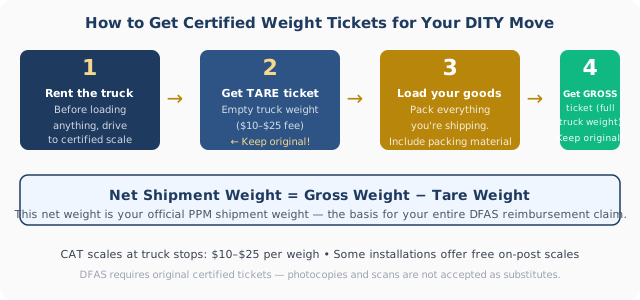
Weight tickets are the foundation of your PPM claim. Without valid, certified tickets, DFAS will not process your reimbursement, no exceptions, no workarounds. This guide covers exactly what you need, where to get it, and how to avoid the mistakes that void weight ticket claims.
Why You Need Two Tickets, Not One
Your PPM reimbursement is based on your net shipment weight, the actual weight of your household goods. The only way to establish net weight is to weigh the vehicle both empty and full:
- Tare weight: The empty truck with its fuel, ramps, and standard equipment
- Gross weight: The fully loaded truck with all your household goods inside
- Net weight: Gross minus tare, this is your shipment weight
You can't measure net weight with a single weigh-in. Some service members try to use the truck's rated capacity from the rental company as their weight estimate. DFAS will not accept this. A "rated capacity" is a maximum load specification, not an actual measurement of what you shipped.
The two-ticket requirement isn't bureaucratic stubbornness, it's the only accurate way to determine what you actually shipped.
Where to Get Certified Weight Tickets
You need a licensed commercial scale that issues certified weight tickets. Your options:
CAT Scales at truck stops: The most accessible option nationwide. CAT scales are inside certified commercial truck stop locations including Pilot Flying J, Love's, Flying J, and many independent truck stops. The scale fee is $10–$15 per weigh, with a free re-weigh within the same stop. Find the nearest CAT scale at catscale.com. CAT scales print a certified ticket immediately, keep this ticket.
Other certified commercial scales: Recycling centers, grain elevators, quarries, and sand/gravel companies often have certified platform scales. Call ahead to confirm they issue certified tickets with the scale operator's signature and facility information.
Installation scales: Many military installations have certified scales available through the TMO or the post transportation office. These are often free or low-cost. Call your losing installation's TMO before your move to ask if an on-post scale is available.
Weigh stations (NOT recommended): State-operated truck weigh stations on highways technically weigh trucks, but they are not set up to issue certified tickets for private use and will typically not allow personal vehicles to use them. Don't count on these.
Step-by-Step: How to Do the Weigh-in Correctly
Step 1: Get Your Tare Weight (Before Loading)
Pick up your rental truck. Before driving it to your home to start loading, take it directly to the nearest certified scale.
What you need at the scale:
- The rental agreement showing the truck's license plate
- A photo ID
- Cash or card for the scale fee ($10–$15)
The scale operator will weigh the truck and print a certified ticket. This ticket will show:
- Date and time
- Scale facility name and certification number
- License plate of the vehicle
- Weight in pounds
- Operator's signature or stamp
Take a photo of this ticket immediately. Store the original in your glove box, separate from anything in the moving truck.
Step 2: Load Your Household Goods
Load everything you plan to ship. This includes furniture, boxes, clothing, appliances, exercise equipment, outdoor gear, everything that's going to your new duty station. Include packing materials (boxes, foam, blankets) in the truck, they count toward your net weight.
Do not load any items you don't plan to ship permanently. Don't load motorcycles or vehicles (they're handled under separate vehicle shipment authorization). If you're unsure whether something qualifies as household goods, call your TMO.
Step 3: Get Your Gross Weight (After Loading)
Once the truck is fully loaded and ready to drive to your new duty station, return to a certified scale, ideally the same one you used for the tare weight, though any certified scale will work.
The gross weight ticket goes through the same process. The operator weighs the truck, prints the ticket.
Critical: Get the gross weight ticket before you start driving to your new location. Once you begin the trip, don't remove any items from the truck before you get weighed. Adding or removing weight after the gross ticket invalidates the weight measurement.
Step 4: Calculate and Document Your Net Weight
Gross weight − tare weight = net shipment weight.
If your gross ticket shows 28,500 lbs and your tare ticket shows 20,800 lbs, your net shipment weight is 7,700 lbs. Keep both tickets in a safe location separate from the moving truck for the rest of the move.
What If I'm Using a Container Service (PODS, U-Pack)?
Container services handle the weighting differently. The container company typically weighs the loaded container and provides documentation. However, you still need to confirm with your TMO that the company's documentation meets DFAS standards for PPM claims. Ask your TMO counselor at your counseling appointment what documentation format is acceptable for container PPM moves.
Where to Keep Your Weight Tickets During the Move
Keep both tickets in:
- Your personal vehicle (not in the moving truck), if the truck breaks down or is in an accident, you don't want your tickets to disappear with it
- A waterproof bag or envelope: thermal paper tickets are heat and moisture sensitive
- Digital backup: photograph both tickets and email yourself the photos immediately
If you lose one or both tickets during the move, contact the scale facility immediately. Some facilities keep transaction records for 30 days or more. If you can get the facility to issue a certified duplicate ticket within that window, DFAS may accept it. But this is a difficult recovery, don't rely on it.
What DFAS Requires on the Ticket
A valid certified weight ticket must show:
- Date and time of the weigh
- Vehicle identification (license plate number)
- Weight in pounds
- Facility name, address, and certification number
- Scale operator's name and signature (or facility stamp)
Tickets missing any of these elements may be rejected. Verify that the license plate on your ticket matches your rental agreement and that your name appears somewhere in the documentation chain.
Common Weight Ticket Errors and How to Recover
Got the tare weight after loading some items: If you loaded even a few boxes before getting your tare ticket, the tare weight is inaccurate. Your best recovery option is to fully unload the truck and get a fresh tare ticket. Yes, this is a pain. But an inaccurate tare ticket will result in a lower (or denied) claim.
Two tickets on different vehicles: If you rented a truck and then swapped to a different vehicle mid-move, you need tare and gross tickets on the same vehicle. Two tickets on different trucks cannot be used together for a single net weight calculation.
Ticket illegible or faded: Thermal paper fades over time and with heat. If your ticket is barely legible by the time you file, DFAS may reject it. Scan or photograph tickets the day you get them and keep them out of heat and sunlight.
For more on the PPM process from start to finish, see our PCS move checklist or review the 7 mistakes that cost service members money before starting your move. Use the DITY move calculator to estimate your payout once you have your weight.